
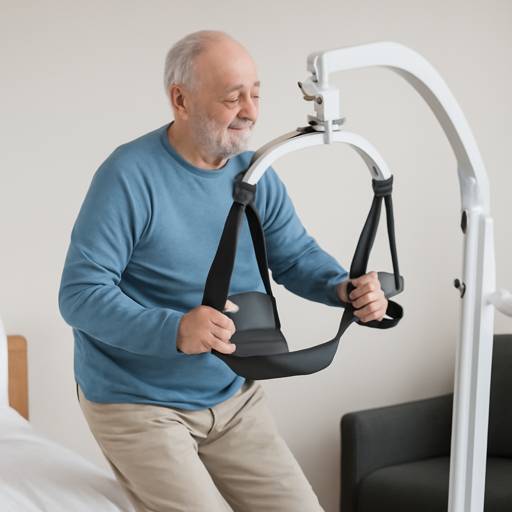
From Bed to Chair: The Game-Changing Power of the Sit to Stand Lift
The daily struggle of transferring a loved one from a seated position to standing—or from a wheelchair to a toilet—is a reality millions of caregivers face. Manual transfers place enormous strain on the lower back, hips, and shoulders, often leading to chronic injury. But there is a solution engineered specifically for patients who can bear partial weight: the power sit to stand lift. This mechanical marvel combines motorized elevation with ergonomic design to convert a simple sit-to-stand motion into a safe, repeatable, and caregiver-friendly process. Unlike full-body sling lifts, a sit-to-stand device supports the patient’s trunk and knees while allowing them to actively participate in the transfer. This active engagement preserves muscle tone, dignity, and independence. The power-assisted version takes this one step further: a battery-powered motor raises or lowers the patient at the touch of a button, eliminating the manual cranking found in older models. For facilities and home users alike, this technology reduces injury risk, speeds up transfers, and provides a stable foundation for daily mobility. Understanding how these lifts work, where they excel, and what to look for in a model is essential for anyone tasked with patient mobility.
Understanding the Mechanics of a Power Sit to Stand Lift
A power sit to stand lift is not merely a chair with a motor. Its engineering focuses on three core components: the base, the mast, and the patient support system. The base is designed with wide-spreading legs that slide under a bed, wheelchair, or toilet. A footplate sits at the bottom, providing a stable surface for the patient’s feet. A padded knee pad locks the patient’s knees securely in place, preventing forward sliding during the lift. The mast houses a rechargeable battery and a linear actuator—the powerful motor that drives the lift upward. As the patient leans slightly forward and grips the handlebars or a sling, the motor engages, smoothly raising the patient to a standing position. The key advantage of a power sit to stand lift is the consistent, controlled motion. Manual versions require a caregiver to crank a handle, which can be uneven and hard on the operator’s joints. The power version eliminates that physical effort. Modern units offer variable speed settings, allowing clinicians to tailor the lift to the patient’s comfort level. Some models include a slow-start feature to reduce jarring movements. The entire transfer takes place with the patient’s feet flat on the footplate, which maintains correct biomechanics. This design encourages the patient to bear as much weight as their condition allows, which is critical for rehabilitation. For example, after hip replacement surgery, a partial weight-bearing transfer helps rebuild strength while protecting the surgical site. The lift’s low-profile base can be maneuvered into tight bathroom spaces, and the locking casters ensure stability during operation. Many caregivers report that switching from a manual to a power model cut their daily transfer time in half while drastically reducing their own fatigue.
A crucial aspect of this technology is its safety architecture. Overload sensors stop the lift if the patient exceeds the weight limit—typically 400 to 600 pounds depending on the model. Emergency lowering buttons are standard, and the battery can deliver dozens of lifts per charge. When you compare a manual sit-to-stand unit to a power sit to stand lift, the difference in ease of use is night and day. For a firsthand look at the latest models, explore the collection of power sit to stand lift options designed for both institutional and home environments. The upfront cost is higher, but the long-term reduction in caregiver injury claims and patient falls makes it a wise investment.
Clinical Benefits and Real-World Applications
The clinical evidence behind power sit-to-stand lifts is compelling. Hospitals, nursing homes, and rehabilitation centers have adopted these devices as part of a safe patient handling program. The most obvious benefit is the reduction in caregiver injury. According to the U.S. Bureau of Labor Statistics, healthcare workers sustain over 50,000 musculoskeletal injuries annually, many from patient transfers. A power sit-to-stand lift eliminates the need for a caregiver to bear the patient’s weight. Instead, the machine does the heavy lifting, while the caregiver simply guides the patient and ensures proper positioning. For patients, the benefits go beyond safety. Active participation in a transfer promotes circulation, maintains bone density, and reduces the risk of pressure ulcers. Patients who can stand independently with assistance often feel a greater sense of control and dignity compared to being hoisted in a sling. This psychological boost can accelerate recovery outcomes.
Real-world applications span across multiple scenarios. In home care, a spouse or adult child can safely transfer a family member from a recliner to a wheelchair without calling for backup. In long-term care facilities, a single nurse can assist multiple patients in a morning routine, reducing wait times and improving resident satisfaction. One case study from a rehabilitation hospital in Ohio reported that after introducing power sit-to-stand lifts in their orthopedic unit, falls during transfers dropped by 34%, and caregiver sick leave decreased by 22% over six months. Another example involves a 68-year-old stroke survivor recovering at home. His wife, a petite woman, could not manually lift him after his left-side weakness made standing difficult. A power lift allowed her to safely help him transition to the commode and back, enabling him to age in place rather than move to a facility. These devices also excel in bariatric care. Models with higher weight capacities and wider bases can accommodate patients up to 700 pounds, a population often underserved by standard equipment.
It is essential to match the lift to the patient’s cognitive ability. Patients must be able to follow simple commands and hold themselves upright with minimal assistance. For those with severe dementia or lower limb paralysis, a full-body sling lift is more appropriate. But for the partial weight-bearing population—recovering from joint replacement, stroke, or general deconditioning—the power sit-to-stand lift is the gold standard. Training is straightforward: caregivers learn to operate the remote, position the sling under the patient’s thighs, and adjust the knee pad height. Most manufacturers provide visual guides and online tutorials. Regular maintenance, including battery checks and cleaning of casters, ensures longevity. The result is a win-win: caregivers preserve their physical health, and patients retain their mobility longer.
Key Features, Sub-Topics, and Real-World Evaluation
When selecting a power sit-to-stand lift, not all models are created equal. Buyers should examine several critical factors to match the device to their specific environment. Weight capacity is the first consideration. A unit rated for 400 pounds may suffice for home use, but bariatric facilities need models that exceed 600 pounds. Base width matters for stability: wider legs prevent tipping but may not fit through narrow doorways. Many lifts now offer a push-button width adjustment that allows the base to narrow for transport and widen during lifts. The knee pad should be contoured and cushioned to avoid pressure points on the shins. Hinged or removable knee pads simplify cleaning, a key concern for infection control. The sling attachment system is another differentiator. Quick-release loops or snap hooks allow fast changes between patients, while a single-patient-use sling reduces cross-contamination risk. Battery life is often overlooked. A lift used eight times per day should hold charge for at least two days. Look for models with a low-battery indicator and an emergency manual override in case the motor fails.
Real-world testing reveals additional nuances. In a 2023 evaluation by a veterans’ hospital, nursing staff compared three popular power sit-to-stand models. They found that a lift with telescoping masts offered better versatility for tall patients, while a unit with a biomechanical display helped caregivers monitor the patient’s weight distribution during the lift. One unexpected finding: the noise level of the motor mattered. A quiet motor (under 55 decibels) caused less anxiety for cognitively impaired patients. Another sub-topic gaining traction is the integration of these lifts with smart home systems. Some newer models feature Bluetooth connectivity that logs transfer frequency and loads into a cloud dashboard. This data helps administrators justify equipment purchases and track usage patterns. In a community health center in Texas, nurses used this data to identify that morning shifts required three times more transfers than afternoon shifts, leading to a reallocation of staff resources. Such insights are valuable for optimizing workflow.
The economic case is equally strong. A power sit-to-stand lift typically costs between $2,500 and $6,000. However, a single workers’ compensation claim for a back injury can exceed $30,000. Facilities that implement a no-lift policy with these devices often see a return on investment within 12 to 18 months. For home users, many insurance plans, including Medicare Part B, may provide partial reimbursement when the device is deemed medically necessary. A physician’s prescription and a physical therapy evaluation are usually required. Potential buyers should also consider rental options for short-term rehabilitation needs. The key takeaway: investing in a quality power sit-to-stand lift is not just about convenience; it is a strategic decision that safeguards human resources and improves patient outcomes. From the quiet hum of the actuator to the reassuring stability of the base, every component is engineered to make a difficult task routine. The body of evidence supporting these devices continues to grow, and for anyone involved in patient care, they are no longer optional—they are essential.